

On April 11, 2026, Kabale Preparatory School became a hub of innovation as teachers, school administrators, and education practitioners from across southwestern Uganda gathered for a one-day Education Technology Workshop designed to reimagine teaching in the digital era.
Organised by EduTech Teachers Network, the workshop brought together passionate educators eager to explore how practical technology tools can strengthen classroom instruction, improve school management, and prepare learners for a fast-changing world.
More than a professional development event, the workshop was a hands-on experience that showed educators one important truth: impactful technology in education does not begin with expensive equipment; it begins with creativity, confidence, and the tools already in teachers’ hands.
A practical approach to modern teaching
From the first session to the final discussion, the focus remained clear: practical solutions teachers could begin using immediately.
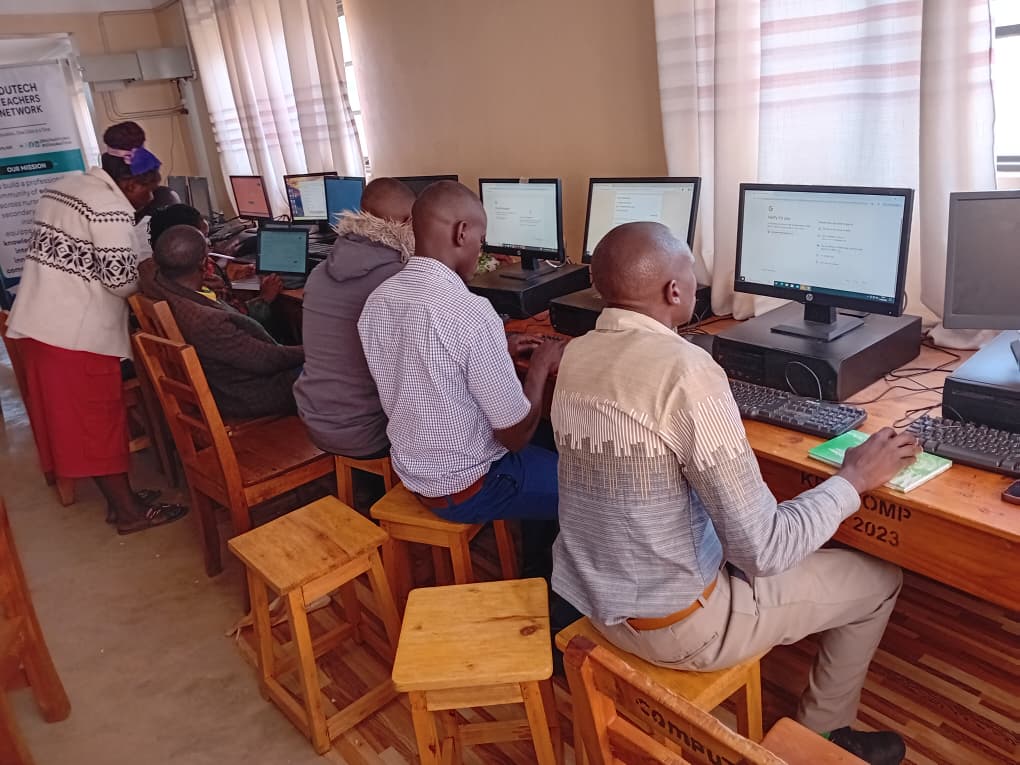
Participants worked with smartphones, laptops, online platforms, and classroom-friendly digital tools that are affordable, accessible, and highly relevant to everyday teaching environments.
The atmosphere was energetic and collaborative. Teachers asked questions, tested new tools, created content, and shared ideas with colleagues facing similar classroom realities.
Turning teachers into content creators
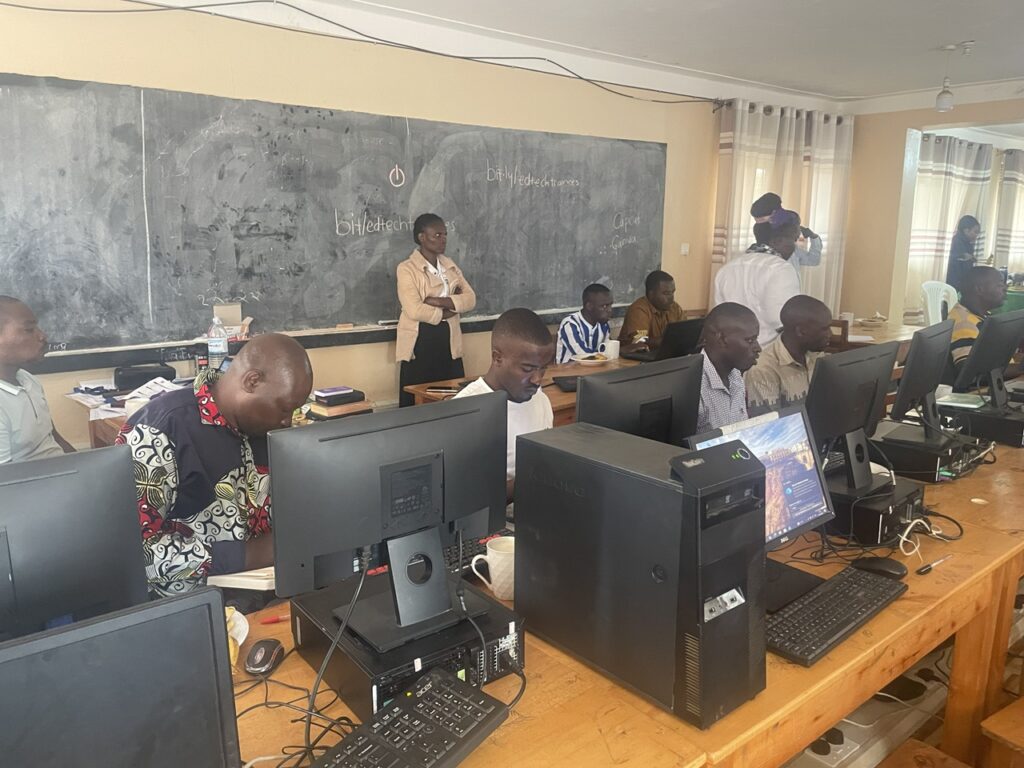
One of the most engaging sessions was led by Andrew Kedi, who introduced participants to classroom content creation.
Teachers learned how to use ordinary smartphones and available devices to record educational videos for learners. Instead of waiting for sophisticated studio equipment, educators were encouraged to start where they are with the technology already within reach.
During the practical training, participants recorded their own sample classroom videos, learned basic video editing using CapCut, created educational clips suitable for classroom use, opened YouTube channels to share learning materials and practised sending video links through WhatsApp and email. They also explored Canva to create presentation slides, flyers and posters, edited images and Video content.
The session inspired many teachers to see themselves not just as educators, but as digital creators capable of producing learning materials tailored to their students’ needs.
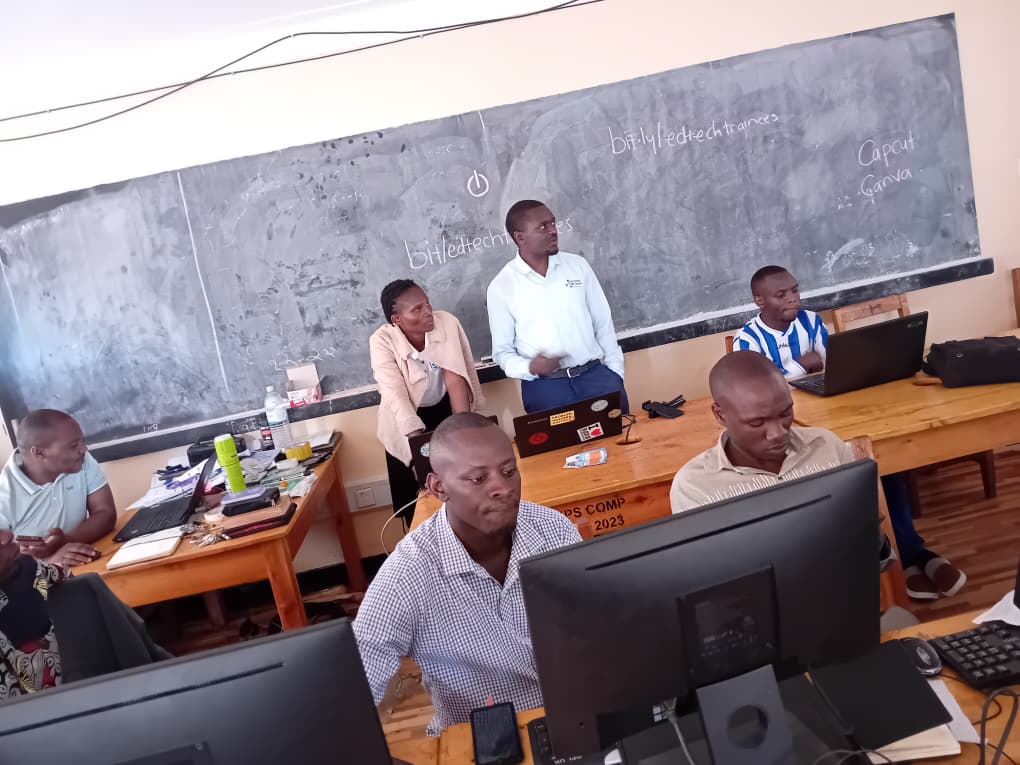
Julius Nsiiro guided educators through the use of Kolibri Studio, a platform that allows schools to organise and distribute learning resources. They learned how to create accounts, upload materials, and build digital resource libraries that can support both teachers and learners.
For schools with limited internet connectivity, this session was especially valuable. It demonstrated how structured offline and low-bandwidth learning resources can expand access to quality education content.
Nora Betsy led a powerful session on integrating technology into schemes of work and lesson planning.
Rather than treating technology as an optional extra, teachers learned how to intentionally include ICT tools in daily instruction. Participants explored how devices such as computers, smartphones, projectors, audio systems and educational videos can be woven into teaching plans to improve engagement and understanding.
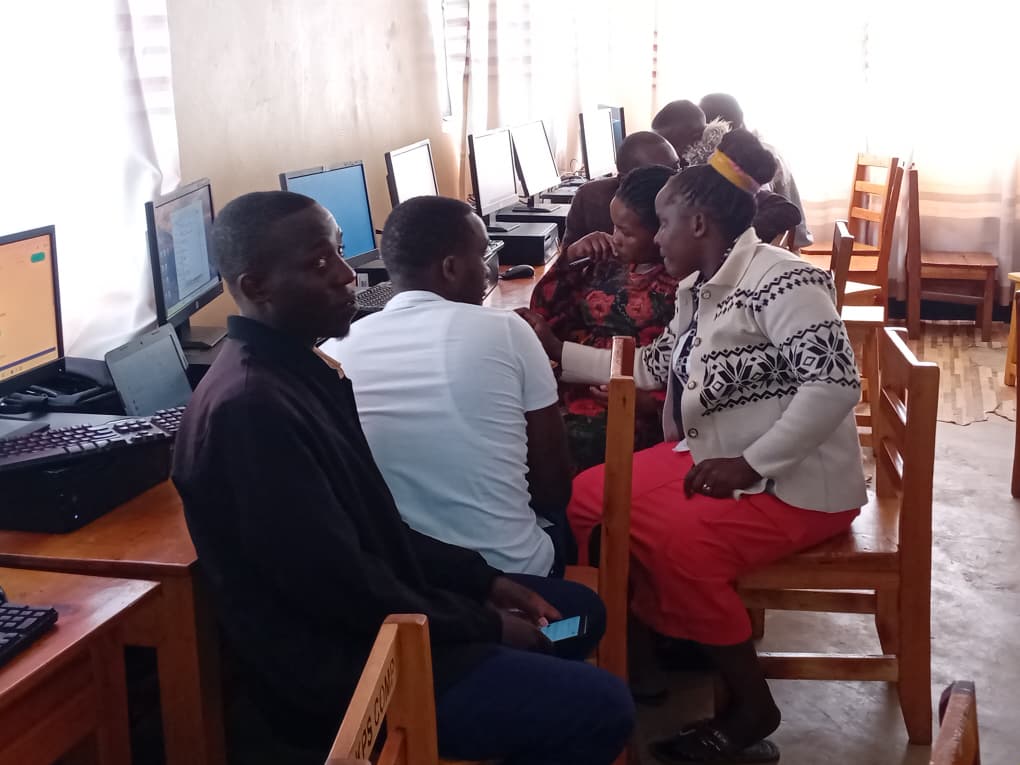
Examples included assigning learners videos before class, using music to reinforce lessons, and applying visual learning strategies that help students retain concepts more effectively.
The session reinforced a crucial message: technology is most effective when built into pedagogy from the start.
One of the most forward-looking sessions was facilitated by Peace Naghodo, who introduced teachers to artificial intelligence and digital collaboration tools.
Participants explored how OpenAI ChatGPT can help educators generate lesson ideas, classroom activities, worksheets, explanations for difficult topics, and more detailed teaching content.
Teachers also practised using collaborative tools such as Google Docs, Google Sheets and Google Drive. They created shared files and edited them together in real time, demonstrating how collaboration can continue beyond the physical classroom.

Many educators also installed ChatGPT on their phones, eager to continue experimenting after the workshop.
Peace also introduced participants to digital school management tools, including automated report card systems developed by Sharebility Uganda. Here, they explored an offline, Excel-based reporting solution designed to make grading, report generation, and student records management easier and faster.
For many schools balancing large workloads with limited administrative capacity, the tools presented offered a practical pathway toward efficiency.
While the workshop delivered technical knowledge, it also built something equally important – confidence.
Many participants arrived curious but uncertain about education technology. They left with practical skills, fresh motivation, and the realisation that digital transformation is possible in any school setting.
Technology was no longer seen as complicated or distant. It became something usable, relevant, and immediately valuable.
Why this matters for Uganda’s education future
Across Uganda and the wider region, schools are navigating changing learner needs, evolving curriculum demands, and increasing expectations around digital readiness.
Workshops like the Kabale session ensure that teachers are not left behind in that transition. Instead, they are placed at the centre of innovation.
When teachers are empowered, students benefit. When schools adopt practical systems, learning improves. When educators collaborate, entire communities grow stronger.
This workshop was more than a one-day training. It was a glimpse into the future of education, one where teachers confidently create their own content, collaborate online, use AI responsibly, and manage classrooms more efficiently.
Inspired by what happened in Kabale? The journey continues in Jinja on 30th May.
Join our upcoming EduTech Teachers Workshop to gain practical skills in AI tools, digital content creation, ICT-integrated lesson planning, collaboration platforms, and smarter classroom innovation so you can thrive in the digital age. Register today and be part of the movement transforming education through technology.
This article was produced by Edutech Teachers’ NetWork. Contributions were made by Andrew Kedi
Leave a Reply