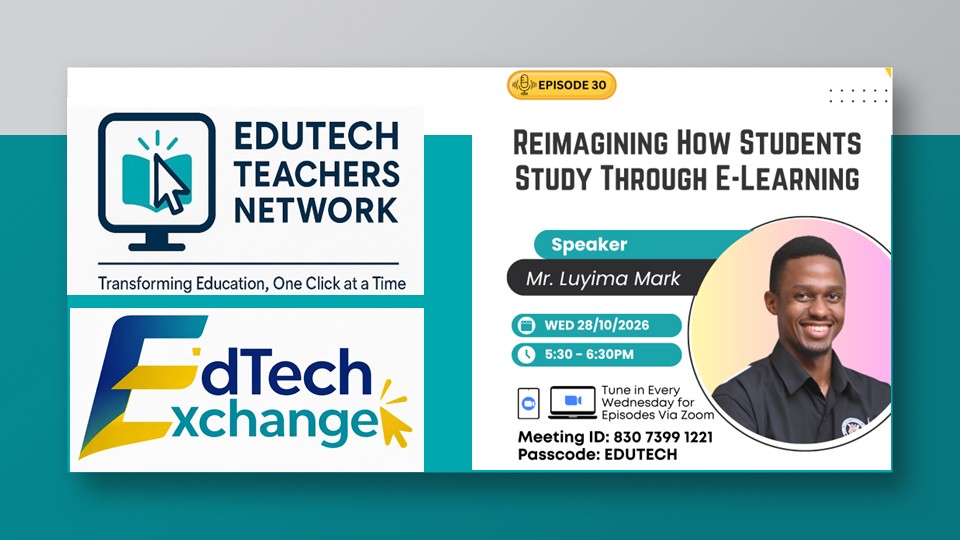
How can digital technology change the way learners study, practise and assess their understanding? This question shaped the discussion at the 30th episode of the EduTech Teachers Network (ETN) EdTech Exchange, held on Wednesday, 28 October 2026.
The session brought together educators and technology enthusiasts for a demonstration of Kate-D, a gamified learning application developed by Mulmet Co. Ltd. The platform was presented by Mr. Luyima Mark and Mr. Peter Mujuni, who took participants through its features and discussed how it can support independent learning, classroom teaching and communication between schools and parents.
The discussion centred on a familiar challenge in education. Learners may spend considerable time reading their notes but still struggle to remember what they have studied or apply it when answering questions. Kate-D seeks to address part of this challenge by combining curriculum-based learning materials with quizzes, interactive games, instant feedback and tools for tracking progress.
Moving beyond repeated reading
The presenters began by examining how learners approach revision and why reading notes repeatedly does not always translate into a clear understanding of a subject.
A learner may finish reading a topic feeling confident, only to discover during an examination that some concepts were not properly understood. Often, the opportunity to identify and correct these gaps comes much later.
The presenters illustrated this by comparing two learners studying the same topic. One reads through the notes and moves on, while the other reads the material, attempts questions, receives feedback and returns to areas where they have made mistakes. The second learner has an opportunity to identify weaknesses and work on them before moving to another topic.
This was the thinking behind the Kate-D demonstration. Rather than making revision depend entirely on reading and end-of-topic examinations, the platform gives learners opportunities to practise regularly and receive feedback as they study.
The presenters also noted that technology can take on some repetitive tasks, including marking and tracking performance. This can give teachers more time to guide learners, provide individual support and concentrate on aspects of teaching that require direct human interaction.
What learners can do with Kate-D
Kate-D is available through the Google Play Store, Apple App Store and a web browser. During the session, the presenters demonstrated several features that bring different learning activities together within the platform.
One of its main features is a collection of interactive games and quizzes based on curriculum content across science subjects and other learning areas. Learners can attempt questions, receive immediate feedback and identify topics that need further revision. This creates room for regular practice and allows learners to monitor their understanding as they progress.
The platform also has a digital library containing learning notes, past examination papers and recorded video lessons. These resources provide additional material for learners who want to revisit classroom topics, prepare for examinations or study independently.
Another feature is the class-based discussion space, where learners and teachers can interact. Such spaces can extend learning beyond the classroom by giving participants an opportunity to ask questions, share ideas and discuss different topics.
The presenters also introduced PAL, an AI-powered learning assistant that allows learners to ask questions and seek further explanations. It offers another way of engaging with learning content, although users still need to assess the information provided and consider its accuracy and relevance.
Kate-D also includes tools for creating personal revision timetables and generating progress reports for parents. These features are intended to help learners organise their study time while giving parents a better view of how their children are progressing.
Beyond the regular school subjects, the platform offers content in robotics, artificial intelligence and coding. The presenters linked some of this content to practical bootcamps, where learners can explore technology through activities such as designing, 3D printing and assembling projects. They also discussed robotics kits that learners can use to continue practising at home.
The connection with Uganda’s competence-based curriculum
The relevance of Kate-D to Uganda’s competence-based curriculum was another important part of the discussion.
Educators wanted to understand how the platform supports learning outcomes, practical application of knowledge and the development of competencies. The presenters explained that the platform incorporates learning outcomes and assessment strategies intended to help learners engage with content beyond memorisation.
They also discussed the importance of involving teachers in developing and reviewing educational content. According to the presenters, the team works with teachers from partner schools and is engaging with the National Curriculum Development Centre (NCDC) and other relevant education stakeholders.
The discussion highlighted a concern shared by many educators as digital learning platforms become more common. Technology can make learning materials easier to access, but the content must still be relevant to the curriculum and appropriate for the learners using it.
Access remains a concern for schools
The demonstration prompted questions about whether platforms such as Kate-D can be adopted widely in Ugandan schools, particularly where internet access and digital devices remain limited.
Some participants pointed out that learners in certain schools have restricted access to personal devices or the internet. These conditions can make it difficult to introduce digital learning activities, even when the available tools offer useful features.
The presenters acknowledged these challenges and discussed their work with schools and engagement with institutions including NCDC and the Ministry of Education. They explained that the team is working with available users while exploring ways to broaden access.
The exchange also brought out a wider point about technology adoption in education. Introducing an application is only one part of the process. Schools also need suitable infrastructure, affordable access, prepared teachers and clear arrangements for integrating the technology into everyday learning.
Subscription and access options
Participants were informed that users can create a free account on Kate-D, while access to premium learning content is provided through subscription.
The indicative prices shared during the session were approximately UGX 50,000 per month or UGX 600,000 per year for full access. Robotics bootcamps attract separate fees, although subscribers can access related content at more affordable rates. The presenters also noted that payments can be made through mobile money.
Educators, parents and learners interested in the platform were encouraged to explore its available features and consider how they might support their learning or teaching activities.
What the session means for educators
The Kate-D presentation offered educators an opportunity to consider how digital tools can influence learners’ study habits. Regular quizzes and immediate feedback can help learners identify gaps in their understanding, while progress information can give teachers additional insight into areas where support may be needed.
The parent reporting feature also points to the role technology can play in strengthening communication between schools and families. When parents have information about learning progress, they have a better basis for following up on their children’s studies.
However, the session did not present technology as a replacement for teachers. The discussion instead emphasised the value of combining digital learning tools with the guidance, encouragement and professional judgement of educators.
For schools considering platforms such as Kate-D, questions of curriculum relevance, affordability, device availability and internet connectivity remain important. These considerations will influence how effectively such tools can be used in different learning environments.
A local innovation in education technology
During the session, the presenters shared that Kate-D is among the ventures supported under the Mastercard Foundation EdTech Fellowship, Cohort 1, implemented with Hive Colab.
Its development reflects the growing involvement of local innovators in creating technology-based solutions for education. By bringing together learning resources, interactive assessments, AI assistance and progress tracking, the platform offers one approach to making independent study more structured and engaging.
The demonstration also gave educators a chance to engage directly with the developers, ask questions and consider the practical opportunities and limitations of adopting the application in schools.
Watch the full session
The full recording of EdTech Exchange Episode 30 is available below. Watch the demonstration to learn more about Kate-D and the discussion on gamified learning.
Session Slides
EdTech Exchange Episode 30 brought attention to an important aspect of digital learning. Learners need more than access to information. They also need opportunities to practise, receive feedback, recognise areas for improvement and take an active role in their learning.
Through its demonstration of Kate-D, Mulmet Co. Ltd presented one way technology can support these activities while giving teachers and parents additional tools to follow learning progress.
Together, we are transforming education through technology, one click at a time.
About Mulment Company and Their Upcoming Bootcamps
MulMet Company provides Deep Technology Education & Robotics Solutiaons Based at Pearl Labs, National ICT Innovation Hub, Nakawa. MulMet develops KATED, a gamified learning platform that makes education simpler, engaging and accessible and seek to collaborate with practicing school-based teachers, particularly in Science, Mathematics and ICT.
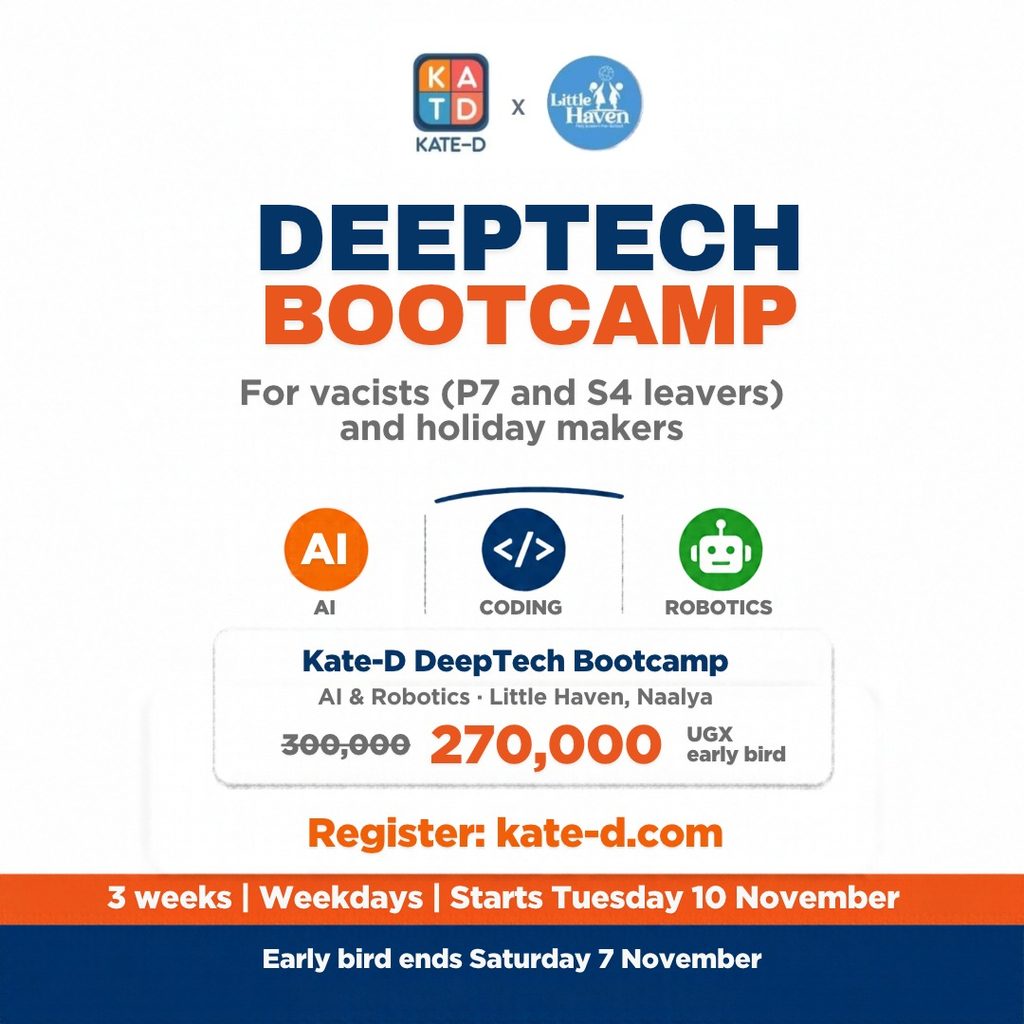
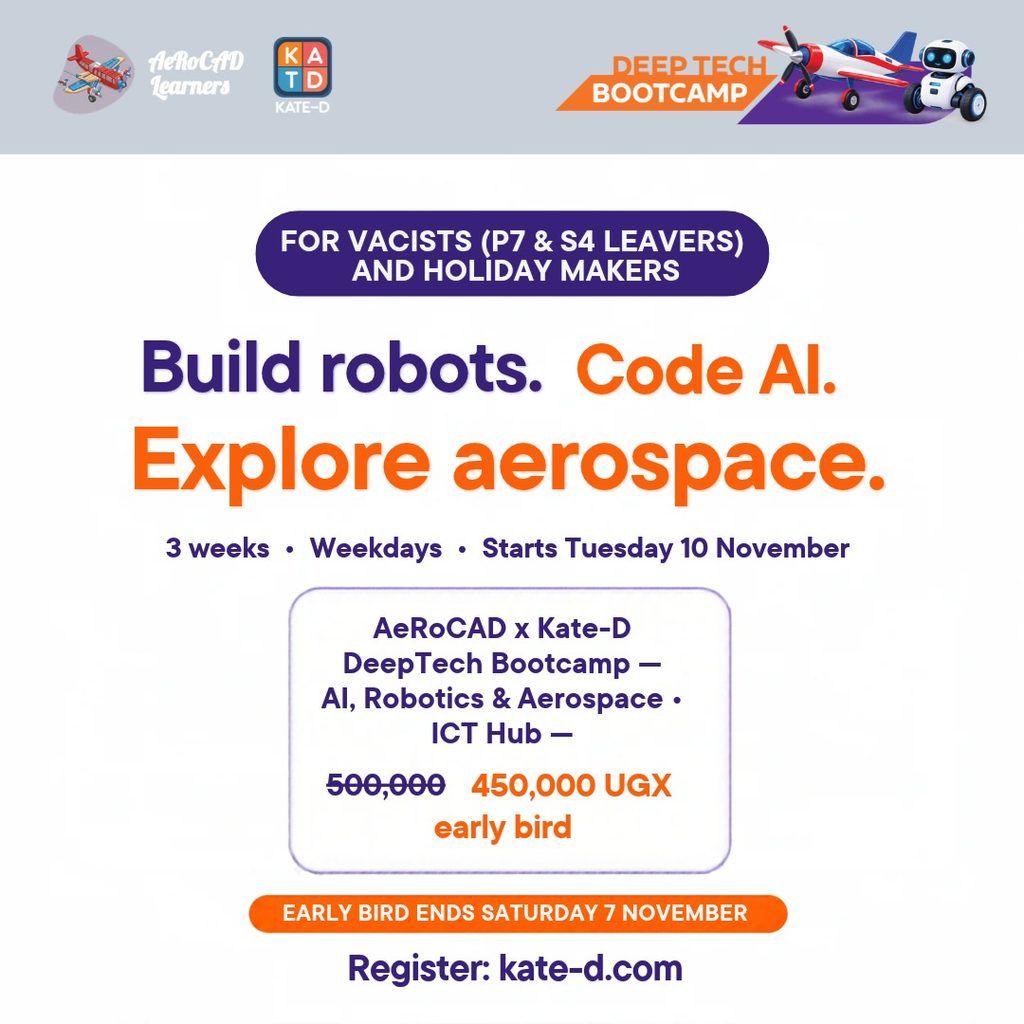
MulMet are organising a students’ bootcamp commencing on 10 November 2026 for learners aged 3–19 years. Through age-appropriate, practical sessions in Robotics, Vibe Coding and Artificial Intelligence (AI), the programme aims to nurture creativity, digital literacy and problem-solving skills.
Interested teachers may explore opportunities to contribute as tutors, mentors and educational content collaborators on KATED and related programmes.
With the bootcamp beginning on 10 November 2026, we recommend educators to circulate the opportunity to learners ready to acquire future-ready skills. Registration is ongoing via https://kate-d.com
Leave a Reply