From a Smartphone to a 10,000+ Subscriber Learning Community
What does it take for a teacher to become a digital educator?
For Mr. Nyirimbibi Isaac, the journey began not with sophisticated equipment or a large production team, but with a classroom problem, a smartphone, and a desire to make Chemistry learning more accessible.
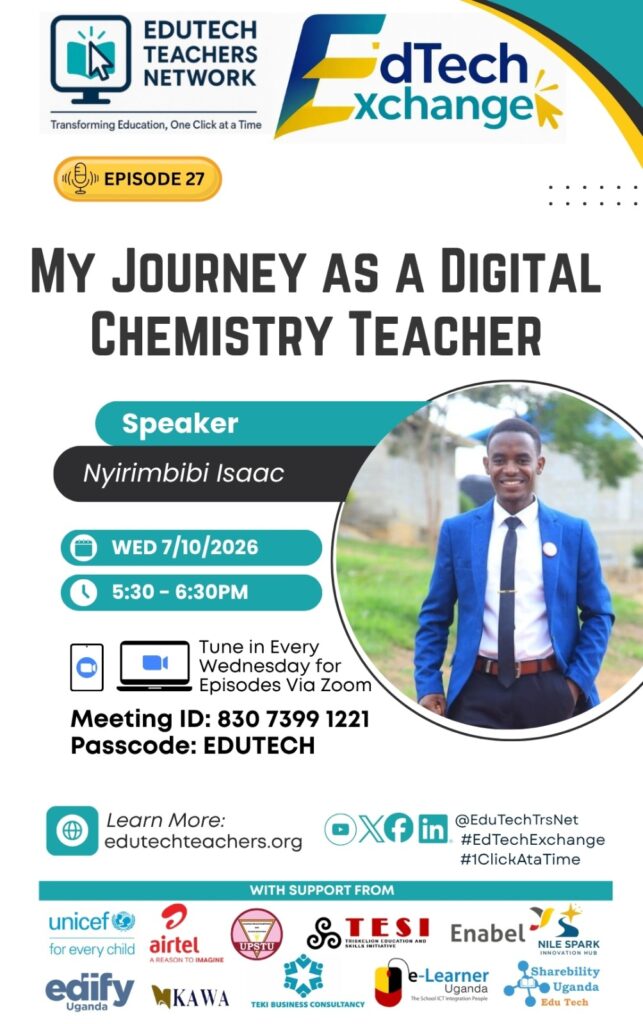
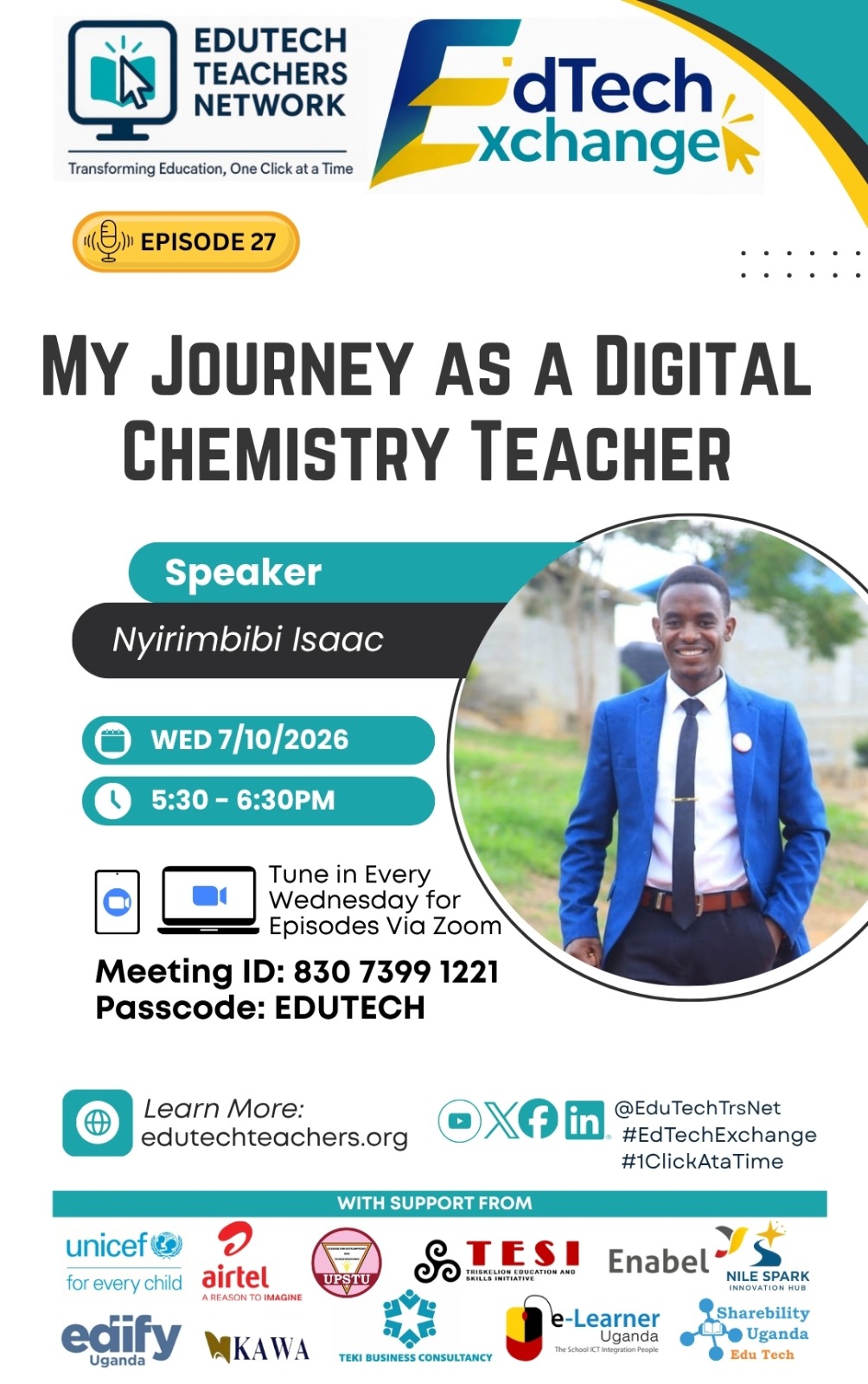
In Episode 27 of the EduTech Teachers Network (ETN) EdTech Exchange, Isaac shared his journey as a digital Chemistry teacher and the story behind his YouTube channel, Nyirimbibi Isaac- ChemistryConnect.
The session offered practical lessons for educators interested in creating digital learning content and demonstrated that teachers do not need to have everything in place before beginning their digital journey.
Starting With a Problem to Solve
Isaac explained that his journey into digital content creation was driven by a challenge he observed among his learners: the need for accessible explanations of difficult Chemistry concepts.
Rather than waiting for perfect conditions or sophisticated technology, he started with what was available to him.
His early approach was simple: identify a learning challenge, create content to address it, share it with learners, and learn from the feedback.
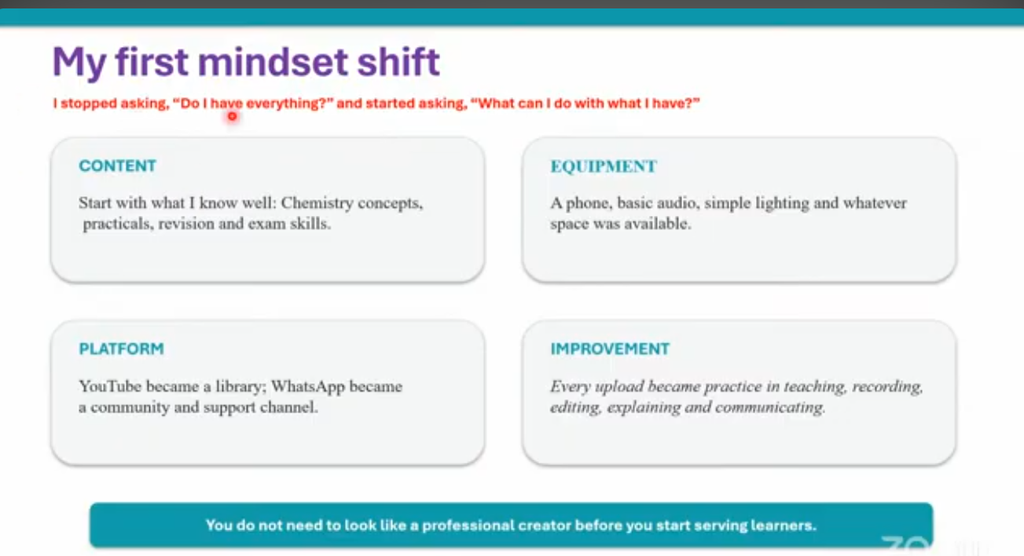
This experience shaped an important principle that Isaac shared during the session:
Start with what you have and focus on what you can do with it.
For educators considering digital content creation, the message was clear: becoming a digital teacher does not require being an ICT expert or owning expensive equipment.
From a Smartphone to a Digital Classroom
Isaac’s early content was created using basic equipment, including a smartphone. Over time, he developed his skills and improved the quality and structure of his educational content.
His journey demonstrates how digital teaching can develop gradually through practice.
Today, his YouTube channel has grown to more than 10,000 subscribers, extending the reach of his Chemistry teaching beyond his own classroom.
Through YouTube, WhatsApp communities, and other digital platforms, his lessons can reach learners and teachers beyond his school.
The Digital Content Creation Process
During the session, Isaac shared the workflow he follows when creating educational content.
His process includes:
- Identifying a learning problem – understanding what learners are struggling with.
- Planning the content – deciding what needs to be explained and how best to present it.
- Recording – creating the lesson using available equipment.
- Editing – improving the presentation and making the content easier to follow.
- Publishing – sharing the finished content through digital platforms.
- Learning from feedback – using audience responses and performance information to improve future content.
This process shows that digital teaching is not simply about recording videos. It involves understanding learners’ needs and continuously improving the learning experience.
Tools That Support the Journey
Isaac also shared some of the tools he uses in his content creation workflow.
These include:
- Smartphone cameras for recording.
- Screen recording tools for demonstrating digital content.
- Microsoft PowerPoint for preparing and presenting learning materials.
- CapCut for video editing.
- YouTube Studio for publishing and monitoring content.
- WhatsApp communities for sharing resources and engaging with learners.
The tools may be familiar to many educators, but Isaac’s experience demonstrated how they can be combined to create a complete digital teaching workflow.
Start Small, Stay Consistent
One of the strongest messages from the session was the importance of starting small and remaining consistent.
Isaac encouraged educators who want to become digital content creators to begin with subjects or areas they already understand well.
Rather than trying to create perfect content from the beginning, teachers can start by producing a few useful pieces of content, learning from the experience, and gradually improving.
He encouraged educators to focus first on serving learners rather than chasing views or perfection.
This learner-centred approach has been central to his own journey.
A 90-Day Starting Point for Educators
Isaac encouraged aspiring digital educators to give themselves a practical starting period of around 90 days.
Rather than waiting until everything is perfect, educators can use the first few months to experiment, create, publish, receive feedback, and develop confidence.
A useful starting target discussed during the session was to create three to five useful pieces of content within the first 30 days, focusing on a subject or problem the educator knows well.
The objective is not immediate popularity. It is to build the habit and experience of creating useful digital learning resources.
Technology as a Tool for Extending Teachers’ Impact
Isaac’s story demonstrates how technology can extend the reach of a teacher’s work beyond the physical classroom.
A lesson created to support students in one school can potentially reach learners and educators across different communities through online platforms.
For ETN, this represents an important part of digital transformation in education: empowering teachers to become not only users of technology but also creators and sharers of educational knowledge.
Encouraging More Educators to Share
The ETN team praised Isaac for sharing his experience and encouraged other educators to consider sharing their own knowledge through digital platforms.
The EdTech Exchange provides a space for educators to learn from one another, share practical experiences, and demonstrate what is possible when technology is applied to real educational challenges.
Isaac’s journey is a reminder that digital transformation does not always begin with a major investment. Sometimes, it begins with a teacher asking:
What can I do with what I already have?
Upcoming ETN Practical Workshop
The session also highlighted an upcoming practical ETN workshop at the MUBS ICT Centre, focusing on areas including:
- Video creation
- Digital content management
- Learning Management Systems (LMS)
- Artificial Intelligence tools
Participants were encouraged to register and take advantage of the practical learning opportunity. ETN also indicated that a discount coupon would be available for attendees who may have difficulty meeting the full workshop fee.
Continuing the Digital Learning Journey
Episode 27 reinforced ETN’s goal of creating a community where educators can learn from each other and turn technology skills into practical action.
Isaac’s journey from using a smartphone to creating a digital Chemistry learning community with more than 10,000 subscribers demonstrates what can happen when educators start small, remain consistent, and focus on solving real learning problems.
The message to other educators is simple:
You do not have to wait until you have everything. Start with what you have, serve your learners, keep learning, and improve along the way.
Watch the Full Session
About EduTech Teachers Network
EduTech Teachers Network (ETN) is a professional community supporting educators to effectively use technology in teaching, learning, and school administration. Through EdTech Exchange sessions, workshops, professional learning communities, and resource sharing, ETN creates opportunities for educators to learn, collaborate, and inspire one another.
Transforming Education, One Click at a Time.
Leave a Reply