
Creating Safer Digital Spaces for Children, Educators and Learning Communities
As education continues to embrace digital transformation, access to smartphones, internet connectivity, and online learning platforms has created new opportunities for teaching and learning. However, this growth also comes with increased responsibility to ensure that children and young people are protected from online risks.
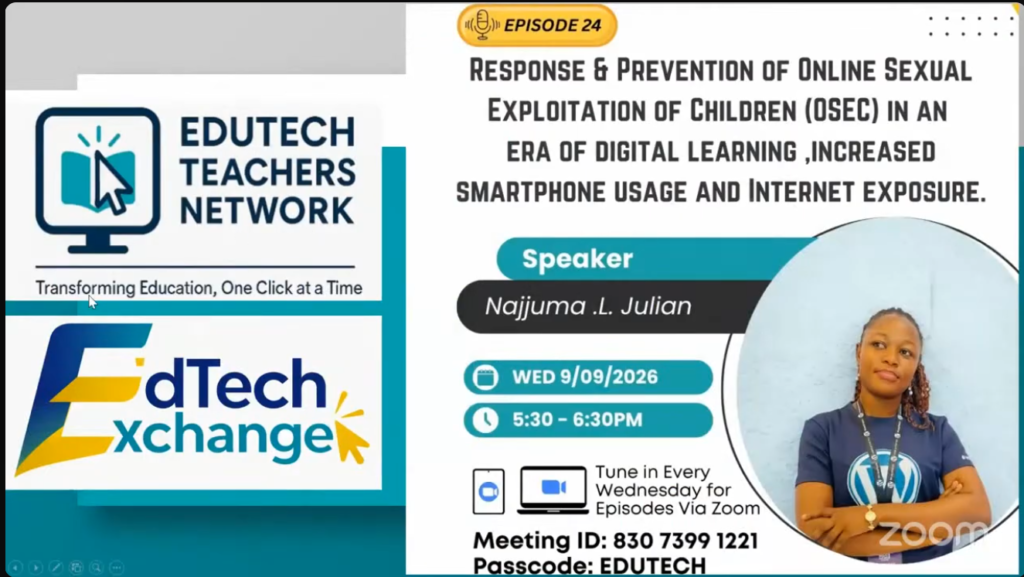
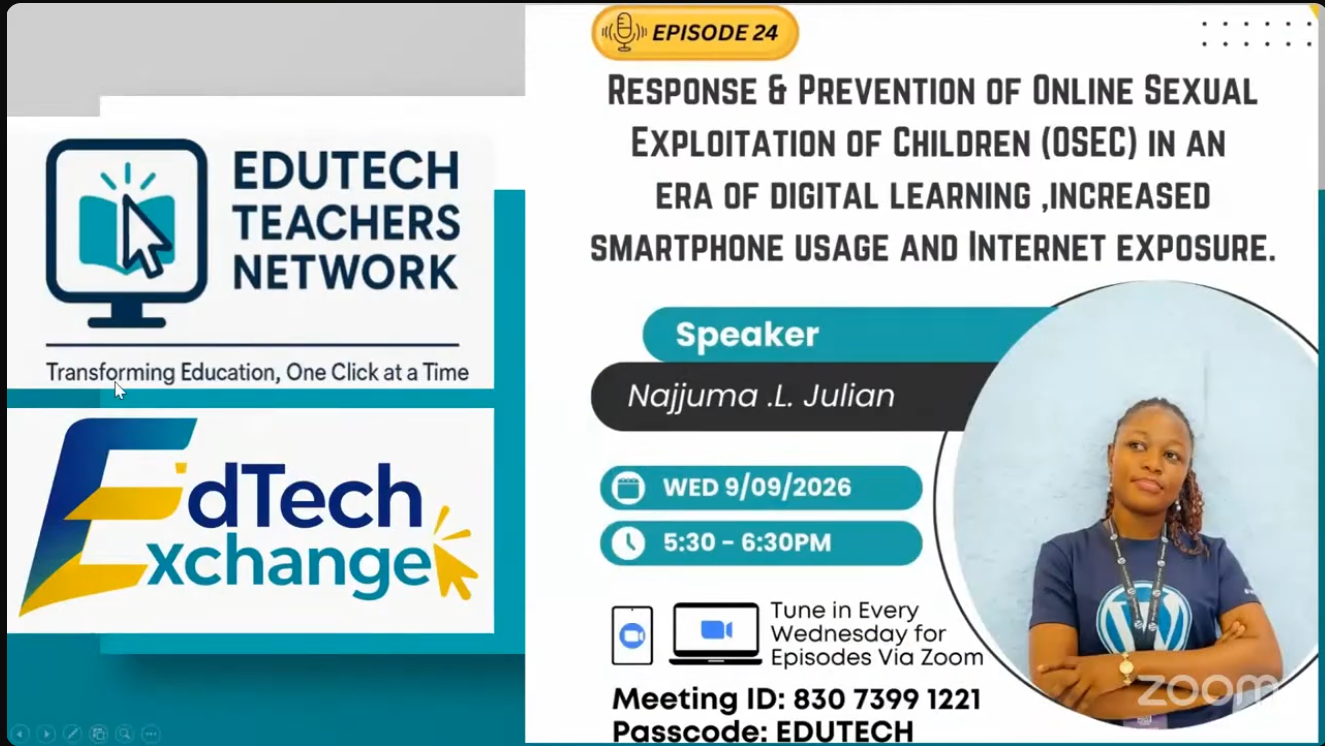
The EduTech Teachers Network (ETN), through its EdTech Exchange series, hosted Episode 24 focusing on an important digital safeguarding conversation: “Response & Prevention of Online Sexual Exploitation of Children (OSEC) in an Era of Digital Learning, Increased Smartphone Usage and Internet Exposure.”
The session brought together educators, technology enthusiasts, and education stakeholders to explore how schools, parents, and communities can respond to emerging online threats while promoting responsible and safe use of technology.
Understanding Online Sexual Exploitation of Children (OSEC)
The session was facilitated by Ms Najjuma L. Julian, who guided participants through the meaning, causes, warning signs, effects, and prevention approaches related to Online Sexual Exploitation of Children.
Participants learned that OSEC occurs when digital technologies such as the internet, smartphones, and social media platforms are used to sexually exploit or abuse children. The discussion highlighted that as children increasingly access digital devices and online spaces, protection measures must grow alongside technology adoption.
The facilitator emphasized that online abuse does not always involve physical contact and that perpetrators may use digital platforms to build relationships, gain trust, manipulate children, and exploit vulnerabilities.
Why Children Become Vulnerable Online
The session explored several factors that may increase children’s vulnerability to online exploitation, including limited digital literacy, poverty, loneliness, and inadequate supervision. Participants discussed how offenders often take advantage of these situations by pretending to be trusted friends or peers online.
A key message from the discussion was the importance of creating safe environments where children feel comfortable reporting uncomfortable online experiences. Teachers and parents have a critical role in encouraging open conversations about online safety rather than creating fear or silence around digital challenges.
Recognizing Warning Signs and Stages of Online Exploitation
The session also examined common warning signs that educators, parents, and caregivers should watch for. These include unusual secrecy around devices, excessive phone use, emotional distress, and unexplained gifts or money.
Participants were introduced to the different stages through which online exploitation may occur, including selecting potential victims, gaining access, building trust, reducing resistance, and eventually controlling the victim.
Understanding these patterns enables adults responsible for children’s wellbeing to identify risks early and take appropriate action.
Building Stronger Digital Safety Practices in Schools
The discussion highlighted that digital safety must become part of everyday education practice. Schools should not only teach learners how to use technology but also equip them with knowledge about responsible online behaviour, privacy, reporting mechanisms, and digital citizenship.
Educators were encouraged to strengthen safeguarding approaches by:
- Promoting digital literacy among learners.
- Creating trusted channels where children can report online concerns.
- Supporting parents and caregivers to improve their digital awareness.
- Developing school policies that address online safety and responsible technology use.
These approaches align with ETN’s wider commitment to supporting educators across different education levels with skills and resources for safe, innovative, and inclusive technology integration. ETN’s mission is to build a professional community of educators equipped to integrate ICT for safe and impactful competence-based pedagogy.
Upcoming ETN Opportunities and Community Engagement
The session also included updates on upcoming education technology opportunities, including workshops, regional activities, and opportunities for members to continue engaging through ETN platforms. Participants were encouraged to register with ETN to remain connected to future learning opportunities and professional communities.
ETN continues to promote professional learning communities where educators share knowledge, experiences, and practical solutions for technology-enabled education.
Watch the Full Session Recording
The complete EdTech Exchange Episode 24 recording is available below. Educators, school leaders, parents, and digital learning advocates are encouraged to watch, share, and continue the conversation on building safer digital environments for children.
About EduTech Teachers Network (ETN)
EduTech Teachers Network (ETN) is a professional community advancing the effective, inclusive, and sustainable use of education technology in teaching, learning, and school administration. Through training sessions, professional learning communities, mentorship, and resource sharing, ETN supports educators to transform education through technology — one click at a time.
Leave a Reply