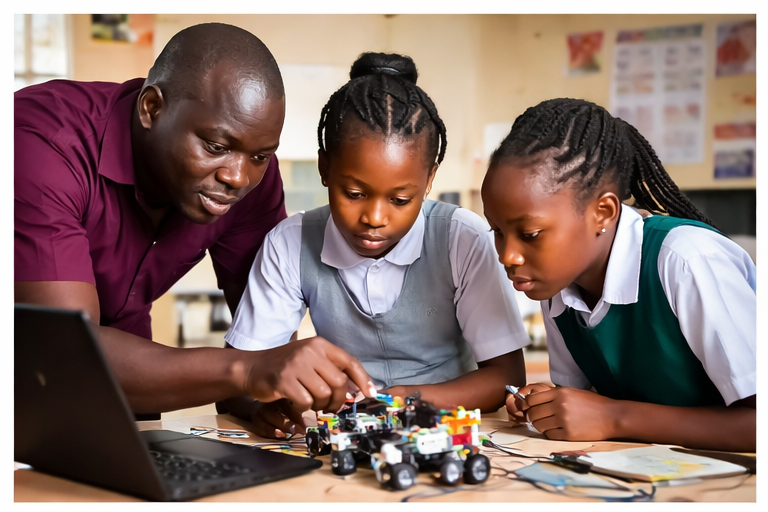
Most classrooms are designed to help learners answer questions correctly. But what if we also taught them how to identify problems worth solving?
In a world grappling with climate change, unemployment, public health challenges, and rapid technological advancement, the ability to innovate has become just as important as the ability to acquire knowledge. Yet many learners still spend more time consuming technology than creating with it.
This raises an important question: Are we preparing learners to navigate the future, or to shape it?
This question formed the basis of Episode 13 of the EdTech Exchange Series, where educators explored how robotics and innovation can empower learners to transform ideas into practical solutions for real-world challenges.
Facilitated by Kevin Ssenabulya, the session challenged educators to rethink the role of technology in education. Rather than viewing technology merely as a tool for delivering content, participants examined how it can become a platform for creativity, experimentation, and problem-solving.
Robotics is more than robots
When people hear the word “robotics,” many imagine sophisticated machines, advanced laboratories, or expensive equipment. However, robotics in education is about much more than building robots.
At its core, robotics provides learners with opportunities to ask questions, investigate challenges, design solutions, test ideas, and learn from failure.
The session introduced participants to the basic components of robotic systems, including sensors, controllers, motors, and power sources. Educators explored how these elements work together to perform specific tasks and how they can be used to introduce learners to engineering and computational thinking concepts.
More importantly, the discussion highlighted how robotics creates opportunities for learners to become active participants in the learning process rather than passive recipients of information.
Every innovation starts with a problem
One of the key messages from the session was that innovation does not begin with technology. It begins with a problem.
Whether it is reducing water wastage at school, improving security, managing waste, or addressing challenges in the community, meaningful innovation starts when learners identify a need and begin exploring possible solutions.
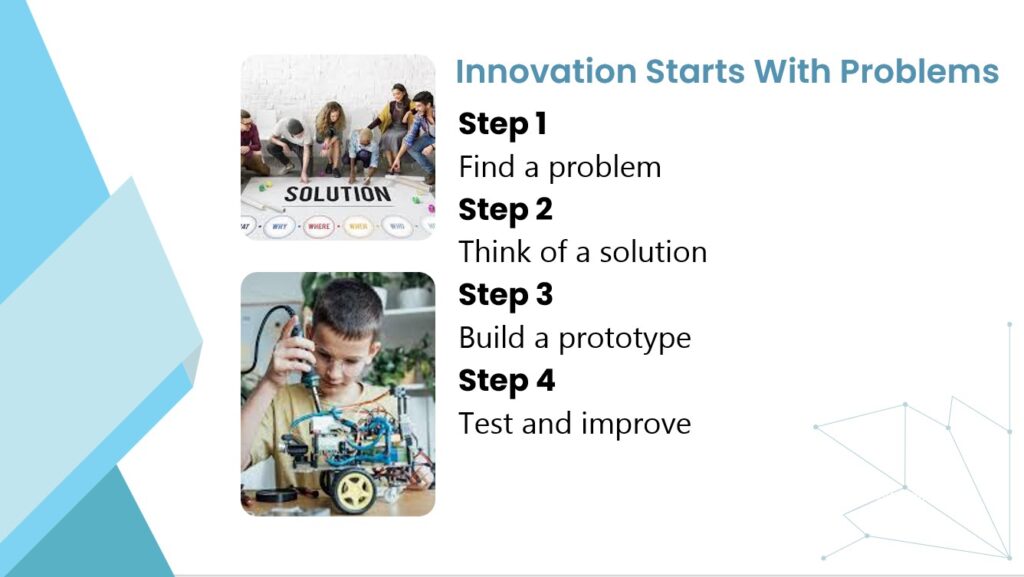
Participants were introduced to the innovation process, which involves identifying challenges, generating ideas, creating prototypes, testing solutions, gathering feedback and making improvements.
This approach encourages learners to see challenges not as obstacles, but as opportunities for creativity and growth.
In many ways, innovation mirrors the learning process itself. Both require curiosity, experimentation, persistence, and a willingness to learn from mistakes.
Learning by building
A highlight of the session was a practical demonstration of a simple alarm system built using Arduino technology.
The demonstration provided educators with a glimpse into how learners can move beyond theory and engage in hands-on problem-solving. By connecting components, programming simple instructions, and testing outcomes, learners are able to see the direct relationship between ideas and action.
Such experiences make learning tangible. Concepts that may seem abstract in textbooks suddenly become real when learners can build, test, and improve their own creations.
This hands-on approach also helps learners develop confidence. Instead of simply learning how technology works, they begin to understand that they can use technology to create solutions themselves.
Preparing learners for an uncertain future
The jobs many learners will hold in the future may not even exist today. As a result, education systems must place increasing emphasis on skills that can adapt to changing circumstances.
Robotics and innovation projects help learners develop many of these essential competencies, including critical thinking, creativity, collaboration, communication, and problem-solving.
These skills are valuable far beyond science and technology subjects. They help learners become adaptable thinkers who can analyse challenges, work with others and develop practical solutions in a variety of contexts.
As educators discussed during the session, the goal is not necessarily to turn every learner into an engineer or programmer. Rather, it is to nurture a mindset that encourages exploration, innovation and lifelong learning.
Creating spaces for innovation
For schools seeking to prepare learners for the future, innovation cannot be confined to occasional classroom activities.
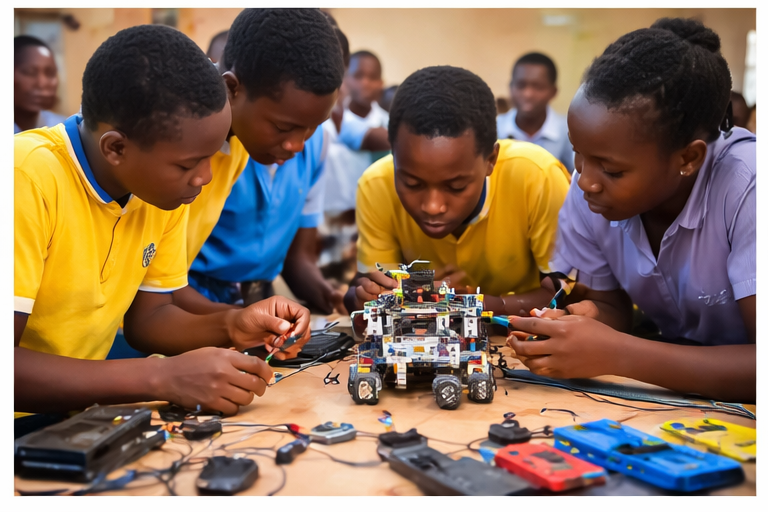
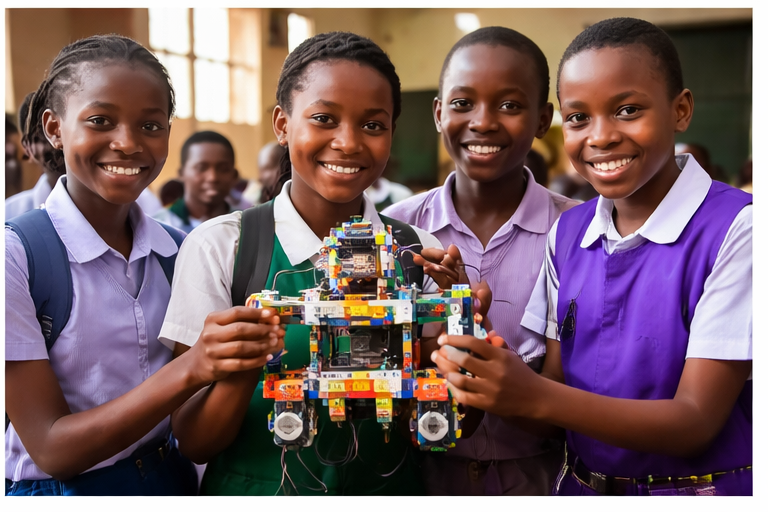
Participants were encouraged to establish robotics and innovation clubs where learners can experiment with ideas, collaborate on projects and engage with real-world challenges. Such spaces provide opportunities for learners to apply knowledge in meaningful ways while developing confidence in their abilities.
These clubs can become hubs of creativity where learners learn not only how to use technology but also how to use it responsibly and purposefully to improve their communities.
From consumers to creators
Perhaps the most important takeaway from the session was the need to shift learners from being consumers of technology to becoming creators of solutions.
Today’s learners interact with technology every day. They use smartphones, social media platforms, websites and digital applications. However, the future belongs to those who can create, innovate, and solve problems using technology.
By integrating robotics and innovation into teaching and learning, educators can help learners develop the confidence and skills needed to move from asking, “How does this work?” to asking, “How can I make this better?”
And perhaps that is the most important lesson of all.
What lies ahead?
The future will not be shaped by those who simply know the answers. It will be shaped by those who can identify problems, imagine possibilities, and create solutions.
The conversation on robotics and innovation does not end with EdTech Exchange. Educators interested in exploring these concepts further will have an opportunity to continue the journey during the upcoming EduTech Workshop scheduled for 12th July 2026 at St. Kizito SS Katikamu Kisule in Luweero District.
The workshop will provide hands-on learning experiences in robotics, coding, app development, multimedia creation and other digital skills, equipping educators with practical tools to nurture creativity, innovation, and problem-solving among learners. As schools seek to prepare learners for an increasingly technology-driven world, such opportunities offer a valuable platform for turning ideas discussed during webinars into classroom practice.
Education has a vital role to play in helping learners become those people.
This article was produced by EduTech Teachers Network. Images used in the article are AI generated
Leave a Reply