

Introduction
The education landscape is transforming rapidly. Artificial intelligence, digital learning platforms, online collaboration tools, and emerging technologies are changing how teachers plan, teach, assess, and interact with learners.
However, technology alone cannot transform education. The greatest transformation happens when educators continuously develop themselves, acquire new skills, reflect on their practice, and intentionally explore innovative ways of improving learning experiences.
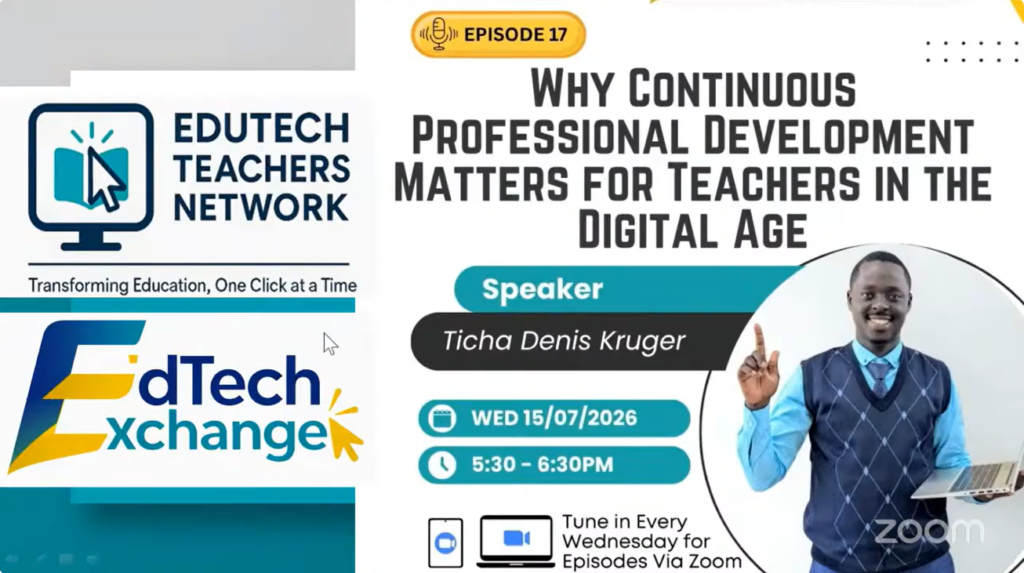
On Wednesday, 15th July 2026, I had the opportunity to facilitate EdTech Exchange Episode 17, hosted by the EduTech Teachers Network, under the theme:
“Why Continuous Professional Development Matters for Teachers in the Digital Age.”
The session brought together educators, school leaders, and education enthusiasts to explore the importance of lifelong learning and practical strategies teachers can use to remain relevant and impactful in a rapidly changing digital world.
Understanding Continuous Professional Development (CPD)
The session began by exploring the meaning and importance of Continuous Professional Development.
CPD is not simply about attending workshops or collecting certificates. It is an intentional process where educators continuously improve their knowledge, skills, attitudes, and professional practices.
For teachers, CPD involves:
- Learning new teaching approaches
- Developing digital competencies
- Reflecting on classroom experiences
- Collaborating with fellow educators
- Experimenting with innovative teaching strategies
- Responding to changing learner needs
A teacher who stops learning risks becoming disconnected from the realities of modern education.
Why CPD Is More Important Than Ever
1. Technology Is Changing the Role of Teachers
One of the key discussions during the session was how technology is redefining the role of educators.
Traditionally, teachers were viewed as the primary source of information. Today, information is readily available through digital platforms, search engines, online courses, and artificial intelligence tools.
This does not reduce the importance of teachers. Instead, it creates opportunities for teachers to become:
- Learning facilitators
- Mentors
- Content creators
- Digital learning designers
- Guides who help learners evaluate and apply information effectively
The modern teacher is not replaced by technology; rather, technology empowers teachers to create richer learning experiences.
2. Learners Are Changing and Teachers Must Adapt
Today’s learners interact with technology from an early age. They consume digital content, communicate online, and expect learning experiences that are engaging and relevant.
Teachers therefore need to continuously develop skills that enable them to:
- Integrate multimedia into lessons
- Create interactive learning experiences
- Encourage collaboration
- Support creativity and critical thinking
- Promote responsible digital citizenship
Understanding learners requires teachers to understand the environments in which they live and learn.
3. Digital Skills Have Become Essential Teaching Skills
A major emphasis of the session was that digital skills are no longer optional skills for ICT teachers alone.
Every teacher, regardless of subject area, requires digital competencies.
Examples include:
Digital Productivity Skills
- Creating and managing digital documents
- Using online collaboration platforms
- Organizing digital resources
Digital Content Creation Skills
- Designing presentations
- Creating educational videos
- Developing interactive learning materials
Digital Assessment Skills
- Using online quizzes
- Collecting learner feedback digitally
- Analyzing learner performance data
Artificial Intelligence Literacy
- Understanding opportunities and limitations of AI
- Using AI responsibly for lesson preparation and learning support
Practical Ways Teachers Can Continue Growing
During the session, participants explored different approaches through which teachers can intentionally develop themselves.
1. Participate in Professional Learning Communities
Teachers grow faster when they learn together.
Professional Learning Communities (PLCs) provide opportunities for educators to:
- Share experiences
- Solve classroom challenges
- Exchange resources
- Collaborate on lesson improvement
Schools can strengthen CPD by creating spaces where teachers learn from one another.
2. Engage in Online Learning Opportunities
The internet provides countless opportunities for professional growth.
Teachers can access:
- Online courses
- Webinars
- Digital teaching resources
- Professional communities
Even dedicating a small amount of time each week to learning can create significant improvement over time.
3. Experiment with Technology in Small Steps
A common challenge among teachers is the belief that technology integration requires advanced skills.
However, effective digital transformation often begins with simple steps:
- Creating a digital presentation
- Using online forms for assessment
- Introducing educational videos
- Using AI tools to improve lesson preparation
- Sharing resources through online platforms
Small experiments build confidence and encourage further exploration.
4. Reflect on Teaching Practice
Professional growth requires reflection.
Teachers should regularly ask:
- What worked well in my lesson?
- What challenges did learners experience?
- How can technology improve this learning experience?
- What new strategy can I try next?
Reflection transforms daily classroom experiences into opportunities for professional development.
Challenges Affecting Teacher Professional Development
The session also acknowledged some challenges educators face, including:
- Limited time due to workload
- Limited access to technology
- Internet connectivity challenges
- Financial limitations
- Lack of confidence using digital tools
- Resistance to change
However, participants were encouraged to focus on progress rather than perfection.
Professional growth does not require knowing everything at once. It requires commitment to learning continuously.
Key Takeaway: The Best Teachers Are Lifelong Learners
One of the strongest messages from the session was:
“The best teachers are not those who know everything; they are those who are committed to learning everything they need to better serve their learners.”
Education will continue to change. New technologies will continue to emerge. However, teachers who embrace continuous professional development will remain prepared to guide learners effectively.
My Reflection as a Facilitator
Facilitating this session reinforced my belief that teacher transformation is at the heart of education transformation.
Technology is only meaningful when educators have the confidence, skills, and mindset to use it effectively.
As educators, we must continue creating communities where teachers support one another, share experiences, and learn together.
Every teacher can become a digital educator—not by mastering every tool, but by developing the willingness to explore, adapt, and innovate.
Appreciation
I extend my appreciation to the EduTech Teachers Network for the opportunity to share during EdTech Exchange Episode 17 and for creating a platform where educators can continuously learn, collaborate, and grow.
Special appreciation goes to all educators who participated, asked questions, shared experiences, and committed themselves to lifelong professional growth.
Together, we continue transforming education—one click at a time.
Download the detailed presentation here:
About the Author
Ticha Denis Kruger is an Education Officer, Edu-Tech facilitator, digital skills trainer, and education technology advocate passionate about supporting teachers and institutions in integrating technology into teaching and learning.
Through training programs, workshops, webinars, and digital innovation initiatives, he supports educators to develop practical digital skills for the modern classroom.
🌐 Visit: www.tichadeniskruger.com
Leave a Reply